Introduction
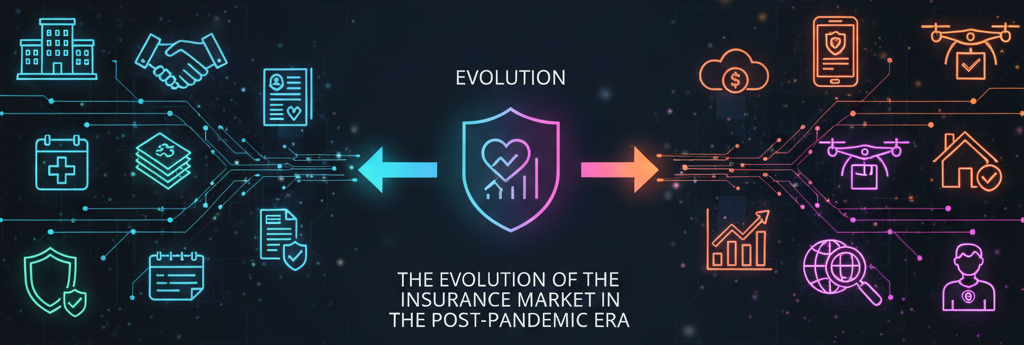
The COVID-19 pandemic transformed the global economy, and few sectors experienced a transformation as profound as the insurance industry. Previously perceived as conservative and slow to adapt, the market has undergone rapid evolution driven by technological innovation, changing consumer expectations, and heightened risk awareness. In the post-pandemic era, insurers are rethinking their strategies, integrating digital solutions, and developing new products to address the complex realities of a more uncertain world. The result is an industry that is not only recovering but reinventing itself to meet the challenges of an ever-changing society.
Impact of the pandemic on the insurance landscape
The pandemic acted as both a stress test and a catalyst for change in the insurance industry. During the initial months of the crisis, insurers faced unprecedented challenges, including surges in health-related claims, business interruption disputes, and tremendous market volatility. Life and health insurers had to quickly adapt to rising mortality risks and increasing healthcare costs, while property and casualty insurers faced the changing coverage demands of customers operating remotely. At the same time, the pandemic exposed the vulnerabilities of traditional underwriting models, which relied heavily on historical data. Insurers realized that risk patterns were changing faster than ever, requiring real-time data integration and predictive analytics. This realization accelerated the adoption of digital tools and transformed the way insurers assess, price, and manage risk.
Digital Transformation and Technology Adoption
One of the most significant trends in the post-pandemic insurance industry is digital transformation. The sudden need for remote work, online claims processing, and virtual customer service forced insurers to accelerate technological innovation. Artificial intelligence (AI), machine learning, and automation now play a crucial role in underwriting, fraud detection, and claims management. Telematics, for example, has revolutionized auto insurance, allowing companies to use real-time driving data to offer personalized premiums. Similarly, health insurers are increasingly turning to wearable devices and digital health platforms to monitor customer well-being and encourage preventive care. Insurtech startups, which combine technology and insurance, have also gained relevance, prompting traditional companies to modernize their operations and improve customer engagement.
The Rise of Customer-Centric Insurance Models
In the post-pandemic world, consumers demand transparency, flexibility, and personalization. They now expect instant access to information, simplified claims processes, and products tailored to their lifestyles. To meet these expectations, insurers are adopting customer-centric models that prioritize digital communication, intuitive mobile apps, and personalized policies.
For example, many insurers now offer on-demand or usage-based insurance, allowing customers to pay only for the coverage they need. This model is especially popular among younger generations, who value flexibility and digital convenience. Furthermore, the pandemic has increased awareness about health and life insurance, leading companies to design simplified, affordable, and accessible policies that reach broader segments of the population.
Emergence of New Types of Coverage
As new risks emerge, so do new types of insurance. The pandemic accelerated the demand for pandemic coverage, cybersecurity insurance, and business continuity protection. With the expansion of remote work and digital operations, cyber risk has become one of the most pressing concerns for businesses worldwide.
Insurers are responding by offering comprehensive cyberattack policies that cover data breaches, ransomware attacks, and digital asset losses. Similarly, climate change and natural disasters have driven demand for environmental and parametric insurance, which offer faster payouts based on measurable events such as temperature spikes or rainfall levels.
The evolution of these new products illustrates how the insurance industry is becoming more proactive, developing solutions that anticipate risks rather than simply reacting to them.
The Role of Data and Artificial Intelligence
Data has become the lifeblood of modern insurance. The ability to analyze large volumes of information in real time allows insurers to assess risk more accurately, detect fraud earlier, and improve the customer experience. Artificial intelligence enables the creation of predictive models that help companies forecast loss probabilities and dynamically adjust prices.
However, this data-driven approach also raises ethical and privacy concerns. Regulators are paying greater attention to how insurers use personal data, particularly regarding algorithms that influence pricing or eligibility. Transparency and fairness in AI-based decision-making will be key factors in maintaining consumer trust as the industry continues to digitize.
Integration of Sustainability and ESG
Another important trend shaping the post-pandemic insurance market is the integration of environmental, social, and governance (ESG) principles. Investors, consumers, and regulators are increasingly holding insurers accountable for their impact on society and the environment.
Insurers now assess not only financial risks but also climate and social risks, incorporating sustainability into their underwriting and investment strategies. For example, many large insurers have begun phasing out coverage for coal projects and investing in renewable energy initiatives. This shift reflects a broader recognition that long-term profitability depends on resilience and responsibility.
Regulatory and Policy Developments
Governments and regulators are also adapting to the changing insurance landscape. The pandemic revealed gaps in global insurance preparedness, prompting debate about public-private partnerships to manage catastrophe risks more effectively. Regulators are focusing on ensuring financial stability while promoting innovation through security testing programs, which allow companies to test new technologies under regulatory oversight.
In addition, new data protection and cybersecurity regulations are influencing how insurers manage customer information. Compliance with ever-evolving laws, such as the California Consumer Privacy Act (CCPA) and similar frameworks worldwide, has become a top priority for insurers operating across multiple jurisdictions.
Challenges in Post-Pandemic Recovery
Despite rapid progress, the insurance industry still faces significant challenges. Economic uncertainty, inflation, and rising claims costs continue to pressure profitability. Furthermore, the increasing frequency of climate-related disasters and cyber incidents complicates risk modeling.
Insurers must also address the lack of trust generated by claims disputes and the opacity of policy wording during the pandemic. Building transparent and empathetic relationships with customers will be essential for long-term success. Furthermore, competition for digital talent (data scientists, actuaries, and AI specialists) represents another obstacle for companies seeking to modernize.
The Future of the Insurance Market
Looking ahead, the insurance industry is poised to become more adaptable, data-driven, and inclusive. The integration of technology will continue to redefine how policies are sold, priced, and managed. Partnerships between insurers and technology companies will deepen, giving rise to innovative products that combine AI, blockchain, and the Internet of Things (IoT). In the coming years, we can expect to see microinsurance models that expand access to underserved populations, especially in emerging markets. Insurers will also increasingly focus on prevention, using data analytics to help customers reduce risk rather than simply compensating them after losses.
Conclusion
The post-pandemic era has transformed the insurance industry from a reactive sector to a dynamic, technology-driven ecosystem focused on resilience, personalization, and innovation. The challenges posed by COVID-19 have accelerated digital transformation, driven new business models, and highlighted the importance of adaptability in a world marked by uncertainty.
As insurers embrace data, AI, and sustainability, the market is evolving toward a future that is not only more efficient, but also more customer-centric and socially responsible. The next decade will define how insurers balance profitability with purpose, and how they can help people and businesses navigate an increasingly complex global landscape.