Introduction
Climate change has become one of the most pressing global challenges of the 21st century, impacting not only the environment but also the stability and performance of the global financial system. Increasingly, investors, businesses, and policymakers recognize that climate-related risks are deeply interconnected with economic growth, asset values, and long-term investment returns. Rising global temperatures, the increased frequency of natural disasters, and evolving regulatory frameworks have made it imperative for the financial sector to adapt to the reality of global warming.
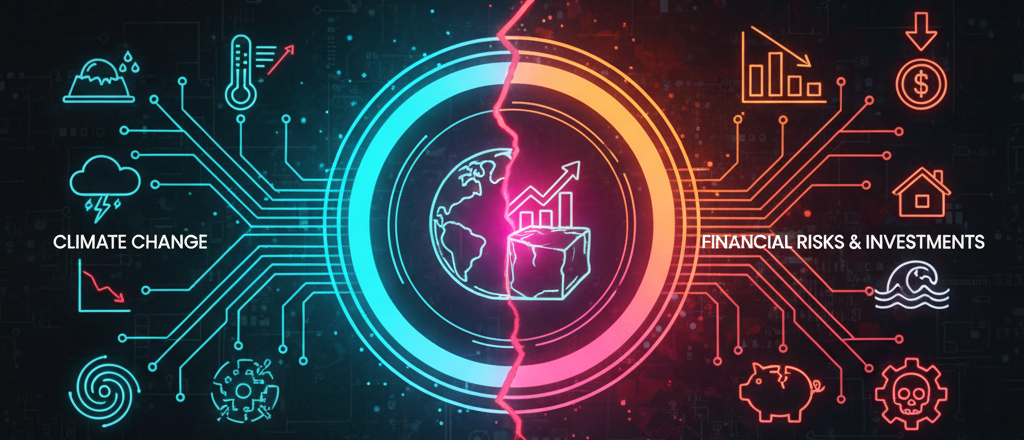
As both physical and transition risks stemming from climate change accelerate, financial institutions are reassessing their risk assessment, portfolio management, and capital allocation methods. Understanding how climate change affects financial risks and investments is critical to ensuring resilience, profitability, and sustainable growth in the years to come.
Physical Risks and Direct Economic Impact
Physical risks stem from the immediate and long-term consequences of climate events, such as hurricanes, floods, droughts, and wildfires. These disasters not only cause loss of life and property but also disrupt markets, supply chains, and infrastructure. According to the Intergovernmental Panel on Climate Change (IPCC), global temperatures have already risen by approximately 1.1°C since pre-industrial times, contributing to annual economic losses of billions of dollars.
For investors, physical risks manifest as damage to tangible assets and a decrease in their value in vulnerable regions. For example, real estate near coastal areas is increasingly exposed to rising sea levels, leading to higher insurance costs and a depreciation of property values. Similarly, the agricultural and manufacturing sectors face production delays due to extreme weather events, impacting income and employment.
Insurance companies are among the most exposed. The World Economic Forum has ranked extreme weather among the top global risks for consecutive years. As claims for natural disasters increase, insurers face higher payouts and potential solvency issues. These ripple effects extend to banks and pension funds that rely on insured assets, revealing how physical climate risks can reverberate throughout the financial system.
Transition Risks: Changes in Regulation, Technology, and Market Behavior
Transition risks emerge as governments, businesses, and societies move toward a low-carbon economy. These risks include regulatory changes, technological disruption, and shifts in consumer preferences that can alter asset values and business models.
For example, the European Green Deal and carbon pricing initiatives are requiring companies to account for the true environmental cost of their operations. High-emission industries, such as oil, coal, and aviation, face declining demand and stricter regulations, reducing their profitability. On the other hand, renewable energy, electric vehicles, and sustainable infrastructure are capturing investors’ attention.
Investors who fail to anticipate these changes could find themselves with stranded assets: investments that lose value as climate policies evolve. According to the International Energy Agency (IEA), achieving net-zero emissions by 2050 will require a drastic reduction in fossil fuel use, which could put trillions of dollars in traditional energy investments at risk. From a strategic perspective, managing transition risks involves rebalancing portfolios, integrating environmental, social, and governance (ESG) criteria, and diversifying into sectors aligned with sustainability trends. Financial institutions are increasingly incorporating climate risk assessment into their credit evaluations, lending practices, and investment strategies.
Liability and Legal Risks
Another growing dimension of climate-related financial risk is civil liability. As public awareness of climate issues increases, companies may face lawsuits for failing to disclose environmental risks, misleading investors, or contributing to environmental damage. This form of legal exposure is particularly relevant for industries that emit significant amounts of greenhouse gases or rely heavily on natural resources.
Several major oil and energy companies have already faced lawsuits for alleged negligence in their contribution to climate change. Investors are also demanding greater transparency through frameworks such as the Working Group on Climate-related Financial Disclosures (TCFD), which encourages companies to report on how climate risks affect their operations and strategy.
Failure to comply with disclosure requirements can lead to regulatory penalties, reputational damage, and decreased investor confidence. As sustainability becomes a core element of corporate governance, legal liability is increasingly intertwined with financial performance.
Emerging Opportunities in Green and Sustainable Investments
While climate change presents profound risks, it also offers significant opportunities for investors willing to adapt. The growing focus on sustainability has fueled a boom in green finance, encompassing renewable energy projects, green bonds, sustainable infrastructure, and climate-focused venture capital.
According to Bloomberg Intelligence, global ESG assets are projected to exceed $40 trillion by 2030, highlighting the rapid growth of investments aligned with environmental goals. Renewable energy companies, electric vehicle manufacturers, and energy efficiency firms are attracting unprecedented funding.
Governments and central banks also play a crucial role in accelerating this transition. The European Central Bank (ECB) and other regulators are incorporating climate considerations into monetary policy and supervision, while sovereign wealth funds are divesting themselves of high-carbon assets.
Investors who proactively align themselves with this transition can benefit from both financial returns and reputational advantages, positioning themselves as leaders in the sustainable economy of the future.
Integrating Climate Risk into Financial Decision-Making
To effectively manage climate-related risks, financial institutions are adopting new tools and analytical frameworks. Stress testing, scenario analysis, and climate risk modeling are being integrated into risk management systems to forecast potential losses under different climate scenarios.
Banks and asset managers are increasingly using data from organizations such as the IPCC and the TCFD to measure their portfolios’ exposure to carbon-intensive industries. Furthermore, credit rating agencies are taking climate risk into account when assessing the creditworthiness of companies and countries.
Institutional investors are also collaborating with companies to promote transparency and encourage sustainable practices. Shareholder activism and the evaluation of ESG criteria are no longer niche practices but mainstream strategies shaping global capital flows.
Conclusion
Climate change has redefined how financial systems perceive and manage risk. Physical damage, regulatory transitions, and legal pressures converge to create a complex landscape where sustainability and profitability are inextricably linked. Financial institutions that fail to integrate climate considerations risk losing credibility and competitiveness.
However, this transformation also opens the door to innovation and opportunities. By embracing green finance, improving disclosure standards, and developing resilient investment strategies, companies and investors can not only mitigate risks but also drive sustainable economic growth. In the coming decades, climate awareness will be not only an ethical responsibility but also a financial imperative. Investors and organizations that adapt early will shape a more stable, sustainable, and prosperous global economy.