Introduction
The financial services landscape in the United States has undergone a profound transformation over the past decade, driven largely by the rise of fintech startups. These technology companies are redefining how consumers access banking, payment, credit, and investment services. Leveraging artificial intelligence (AI), blockchain, mobile applications, and cloud computing, fintech startups have introduced innovative solutions that challenge the traditional banking model.
This evolution has not only altered the competitive dynamics of the financial sector but has also influenced regulatory approaches, investment priorities, and customer expectations. The rise of fintech has forced traditional banks to adapt, whether through partnerships, acquisitions, or internal digital transformation strategies.
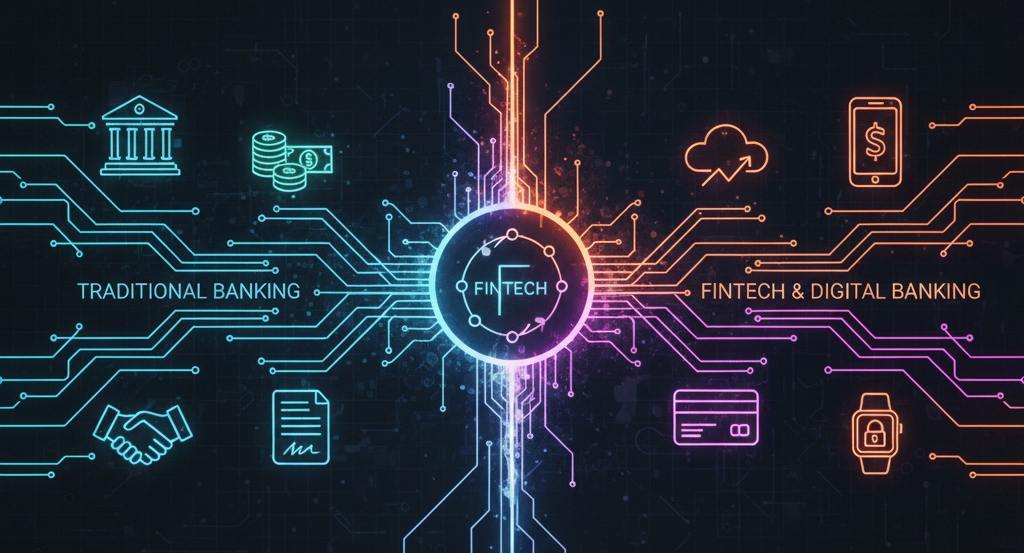
The Growth of Fintech in the United States
Fintech in the United States began to gain traction in the early 2010s, initially focusing on peer-to-peer payments and lending. Companies like Square, PayPal, and LendingClub demonstrated that technology could simplify financial transactions, reduce costs, and improve the user experience. By 2023, the US fintech ecosystem had grown into a multi-billion-dollar industry, with thousands of startups offering services in banking, insurance, wealth management, and regulatory technology (RegTech).
Several factors fueled this growth. First, the widespread adoption of smartphones and high-speed internet created a platform for mobile banking and digital financial services. Second, evolving consumer expectations, particularly among younger generations, demanded faster, more convenient, and more transparent financial solutions. Third, regulatory testing environments and support for innovation from institutions like the Office of the Comptroller of the Currency (OCC) fostered fintech experimentation while maintaining oversight.
Transforming Traditional Banking Services
Fintech startups have transformed traditional banking in multiple ways:
1. Payments and Transactions:
Digital wallets, mobile payment apps, and contactless solutions have reduced reliance on physical bank branches. Companies like Venmo, Zelle, and Cash App allow users to transfer funds instantly, often at a lower cost than traditional banks. This has pressured banks to improve their digital payment capabilities and reduce fees to remain competitive.
2. Loans and Credit: Peer-to-peer lending platforms and alternative credit scoring models pose a challenge to conventional lending. Fintech lenders use AI-powered analytics and non-traditional data sources, such as social media activity and utility payments, to assess creditworthiness. This approach allows for faster loan approvals, broader access to credit, and more competitive interest rates.
3. Wealth Management and Investment: Robo-advisors, such as Betterment and Wealthfront, offer algorithm-based investment management at a lower cost than traditional wealth management services. Automatic portfolio rebalancing, tax optimization, and intuitive interfaces have attracted a growing segment of retail investors, prompting traditional banks to adopt digital advisory platforms.
4. Banking Infrastructure and Back-End Services: Fintech startups also provide solutions for banks themselves, including cloud-based core banking systems, cybersecurity platforms, and RegTech solutions. By outsourcing technology and compliance functions to specialized startups, banks can reduce costs, improve efficiency, and optimize risk management.
Impact on Traditional Banking Models
The rise of fintech has had several notable impacts on traditional banking:
1. Increased Competition and Customer Expectations: Consumers now expect agile, personalized, and hassle-free financial services. Traditional banks must invest in mobile platforms, AI-powered customer service, and real-time transaction monitoring to meet these expectations. Failure to adapt can result in losing market share to more agile fintech competitors.
2. Partnerships and Acquisitions: Many traditional banks are collaborating with fintech startups to integrate innovative solutions. Examples include JPMorgan Chase’s partnerships with fintech companies for digital payments and Wells Fargo’s acquisition of fintech companies to strengthen its lending and wealth management capabilities. These collaborations accelerate digital transformation and allow banks to remain competitive without fully developing in-house solutions.
3. Regulatory Challenges: As fintech companies expand their services, regulatory frameworks evolve to address new risks, including threats to cybersecurity, data privacy, and consumer protection. Traditional banks must navigate overlapping regulations, while fintechs operate in agile regulatory environments, which can influence market balance and compliance costs.
4. Operational Efficiency and Cost Reduction: Fintech technologies, such as AI-powered customer service, automated fulfillment, and blockchain-based settlements, enable traditional banks to reduce operating costs. By integrating these technologies, banks can streamline processes, minimize errors, and improve profitability.
Fintech as an Engine of Financial Inclusion
Beyond competition, fintech startups have driven financial inclusion in the U.S. Mobile banking apps, microcredit platforms, and digital payment solutions provide access to unbanked or underbanked populations. This expansion indirectly benefits traditional banks, as greater participation in the financial system generates new opportunities for savings, credit, and investment products.
Furthermore, fintech innovations enable underserved communities to build credit histories and access financial education tools, further strengthening the overall financial ecosystem.
Challenges and Future Outlook
Despite their rapid growth, fintech startups face challenges that affect their impact on traditional banking. Market saturation, cybersecurity threats, regulatory scrutiny, and capital constraints can restrict expansion. Additionally, fintech companies must continuously innovate to maintain their competitive edge as banks adopt similar technologies.
Looking ahead, the integration of AI, blockchain, and open banking protocols is expected to further transform the sector. Traditional banks that collaborate with fintechs, prioritize customer experience, and invest in scalable technology solutions are highly likely to thrive. On the other hand, fintech startups will continue to push boundaries, driving constant evolution in banking practices.
Conclusion
The evolution of fintech startups in the United States has radically transformed the banking landscape. By offering innovative solutions in payments, lending, investments, and banking infrastructure, fintech companies have revolutionized traditional banking models and raised consumer expectations.
Traditional banks have responded through alliances, acquisitions, and digital transformation initiatives, creating a more dynamic, competitive, and technologically advanced financial ecosystem. While challenges persist—such as regulatory compliance and cybersecurity risks—the rise of fintech has boosted operational efficiency, financial inclusion, and innovation across the sector.
As financial technology continues to evolve, the interaction between startups and traditional banks will shape the future of financial services, emphasizing speed, accessibility, transparency, and customer-centric design as hallmarks of a modern banking system.