Introduction
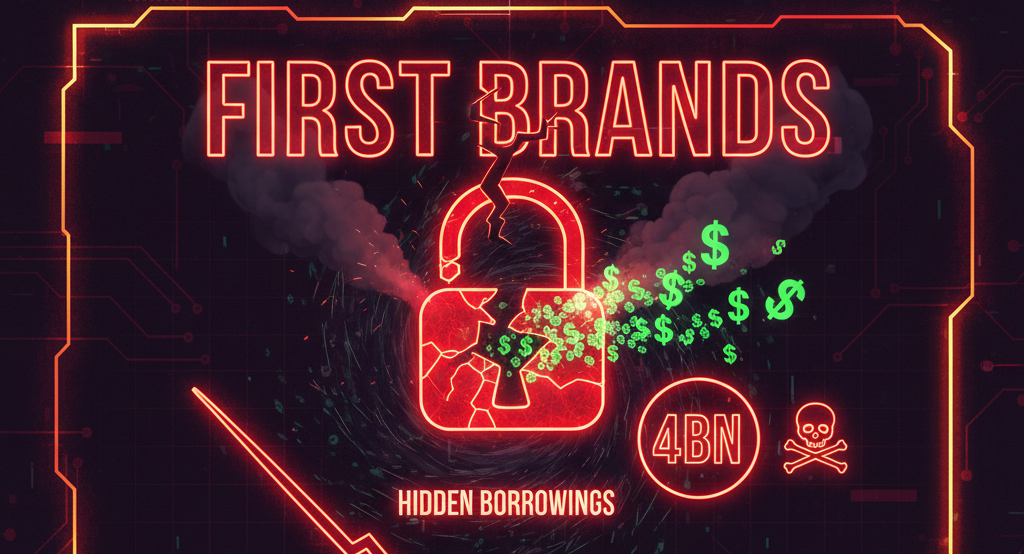
In a shocking development that has shocked financial markets, First Brands Corporation is on the brink of bankruptcy after it was revealed that the company concealed nearly $4 billion in undisclosed loans. This discovery has raised serious questions about the firm’s accounting practices, corporate governance, and internal oversight. Investors, regulators, and analysts are struggling to understand how one of the leading companies in the consumer goods sector could have hidden such a massive amount of debt on its balance sheet. The situation has not only eroded market confidence in First Brands but has also revived concerns about transparency and risk management in corporate America.
Background: A Once-Stable Giant
First Brands, known for producing a wide range of household and automotive products, was long considered a relatively stable company. Over the past decade, it expanded aggressively through acquisitions, buying smaller brands to strengthen its portfolio. These transactions were financed through a combination of traditional loans, private placements, and bond issues. However, it now appears that some of the company’s financial practices were far less transparent than investors believed.
According to reports from industry experts and regulatory filings, First Brands used off-balance-sheet entities to accumulate additional debt, avoiding disclosure to shareholders. These hidden loans theoretically inflated the company’s operating capacity, masking its deteriorating financial health.
How the Hidden Loans Were Uncovered
The revelation followed an internal audit initiated by First Brands’ new CFO, appointed earlier this year amid growing investor pressure for financial clarity. The audit, conducted with the assistance of outside consultants, revealed complex financial instruments and opaque subsidiary structures that had been used to hide liabilities.
Several of these entities were apparently registered in offshore jurisdictions with limited transparency requirements, allowing First Brands to circumvent accounting rules. Some debts were classified as “vendor financing” or “strategic partnership obligations,” terms that helped obscure their true nature.
When the auditors communicated their findings to the board of directors, emergency meetings were called to assess the company’s solvency. Within weeks, the situation escalated into a full-blown crisis when credit rating agencies downgraded First Brands’ debt to junk status, citing serious liquidity risks.
Market Reaction and Investor Repercussions
The news of the hidden debt triggered a sharp sell-off in First Brands’ stock, which plummeted more than 70% in a single week. Bondholders began unloading their positions as rumors of insolvency spread, and several institutional investors reportedly froze new financing to the company.
Major banks that had exposure to First Brands, either through direct loans or secured loans, are reviewing their positions to mitigate potential losses. Analysts warn that the company’s collapse could have a domino effect on the consumer goods and packaging sectors, where supply chains are deeply interconnected. One hedge fund manager described the situation as “a classic example of aggressive financial engineering gone wrong,” emphasizing that the lack of transparency reflects systemic problems in corporate debt reporting.
Regulatory Scrutiny and Legal Consequences
The U.S. Securities and Exchange Commission (SEC) and the Department of Justice (DOJ) have reportedly launched parallel investigations into the company’s financial reporting. Regulators are examining whether First Brands intentionally misled investors or violated federal securities laws by failing to disclose material liabilities.
If wrongdoing is proven, the company could face severe penalties, including indictments from executives and lawsuits from shareholders. Former executives who authorized the accounting maneuvers could also be held personally liable. Legal experts suggest this case could become one of the most significant corporate accounting scandals since the early 2000s.
Furthermore, credit insurers and financial institutions involved in underwriting First Brands’ recent bond issues are expected to face questions about their due diligence processes. This renewed scrutiny could tighten credit conditions for similar mid-cap companies seeking financing in the coming months.
Operational and Employee Impact
Beyond the financial implications, the crisis poses existential risks to First Brands’ operational stability. The company employs more than 12,000 people in North America and Europe, and its supply network encompasses hundreds of suppliers. Faced with liquidity shortages, suppliers have begun demanding advance payments, while distributors are reducing orders.
Insiders have reported that some manufacturing plants could temporarily suspend production due to unpaid invoices and disrupted supply chains. If bankruptcy proceedings are initiated, thousands of jobs could be at risk, and the company’s brand portfolio could be partially sold to pay creditors.
Employees, many of whom own company stock as part of their retirement plans, have seen the value of their stakes evaporate. Unions are now pushing for transparency regarding the company’s restructuring plans and employee protections.
The Role of Auditors and Financial Advisors
A key aspect of the unfolding scandal is the role of First Brands’ external auditors and financial advisors, who failed to detect and disclose the hidden loans earlier. Questions are being raised about whether the auditors exercised sufficient professional skepticism or overlooked irregularities in exchange for maintaining lucrative consulting contracts.
Industry analysts say the situation highlights the need for stricter auditing standards and stronger oversight of complex financial arrangements. The scandal could also lead to policy changes requiring companies to publicly disclose all off-balance sheet liabilities and related-party transactions in greater detail.
Implications for the Industry and the Market
The First Brands crisis serves as a stark reminder of the risks associated with opaque financial practices in highly leveraged industries. As consumer goods companies face increasingly tight margins and competitive pressures, some have turned to financial engineering to maintain the appearance of growth and stability. However, these tactics can mask deeper operational inefficiencies and erode investor confidence.
Analysts predict that lenders will take more conservative approaches when evaluating corporate borrowers, especially those engaged in aggressive acquisition strategies. This event could accelerate the trend toward stricter disclosure standards and improved credit oversight across the corporate sector.
Furthermore, investors are likely to demand greater transparency and real-time reporting, leveraging AI-based financial forensics tools to detect anomalies in corporate records.
A Broader Message on Corporate Responsibility
First Brands’ downfall is not an isolated incident, but part of a broader pattern of corporate responsibility crises that have emerged in the post-pandemic economy. As interest rates rise and credit conditions tighten, companies that relied on cheap debt and creative accounting face increasing exposure. Both regulators and investors are re-evaluating the systems designed to protect against these excesses. Some experts argue that the crisis represents a wake-up call for both boards of directors and shareholders to prioritize governance, ethics, and long-term sustainability over short-term profits.
Conclusion
The revelation of $4 billion in hidden loans has brought First Brands to the brink of bankruptcy and shattered its reputation as a stable market player. What began as a seemingly routine internal audit has uncovered a web of financial misrepresentation with profound implications for employees, investors, and the broader market.
As the investigation continues, the case is expected to transform the debate about corporate transparency, audit integrity, and financial disclosure standards in the United States. The First Brands scandal serves as a warning about the dangers of opacity in modern corporate finance and a reminder that trust, once broken, is much harder to rebuild than balance sheets.